























Carpet Cleaning Detergent and the ‘Cruelty-Free’ Mindset: A Love for Animals in Every Corner of the Home
Carpet Cleaning Detergent – Cruelty-Free Certification
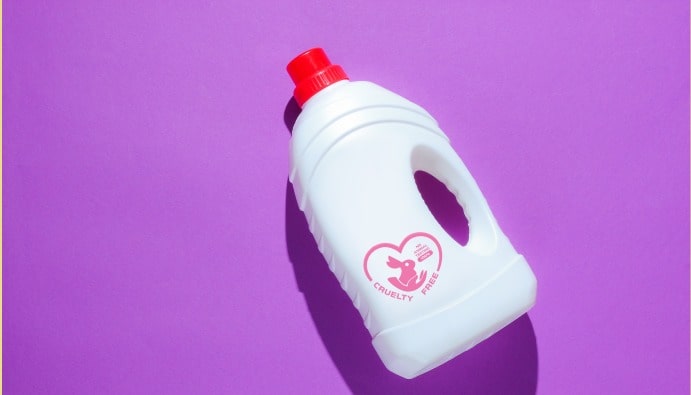
“Cruelty-free” literally means “free from cruelty.” When applied to a product, it means that no animals are harmed at any stage of its production process. This definition encompasses not only that the final product is not tested on animals but also that every single ingredient in the formulation has no history of animal testing throughout the supply chain. This concept is increasingly discussed in the context of cosmetic products. However, when it comes to household cleaning products, awareness of “cruelty-free” practices has not yet reached the desired level. With products that are part of daily life—such as carpet cleaning detergents—people often focus on the product’s performance and price, while rarely questioning the production process behind it. Yet whether a product is “cruelty-free” determines which values we support by purchasing it. Animal testing refers to experiments conducted on animals to assess the safety of a product or ingredient. Historically, these tests have been viewed as part of scientific research; however, over the years, they have come under serious scrutiny from both ethical and scientific perspectives. Animals used in these tests include rabbits, mice, guinea pigs, and dogs. These animals are used to assess factors such as skin irritation, eye irritation, acute toxicity, and allergy potential. Test methods include extremely painful procedures, such as applying a substance while the animals’ eyelids are held open. Household chemicals, such as carpet cleaning detergents, are also among the product groups that have historically been subjected to these types of tests. We need to pause and reflect at this point. Is it truly unavoidable that a product designed to make our lives easier must be developed at the expense of another living being’s suffering? If science and technology have advanced this far, there must be ways to prove a product’s safety without using animals. Loving animals is often understood as petting a cat, feeding a dog, or giving food to stray animals. Yet loving animals also requires an awareness that lies behind our everyday choices. Every product we bring into our homes is, in fact, a choice. Questioning the production processes and values behind that choice is one of the most concrete expressions of love for animals. When choosing a carpet cleaning detergent, looking for a “cruelty-free” certification essentially means, “I don’t want another living being to be harmed while I use this product.” This may not seem like a major action, but the sum of our purchasing decisions directly influences brands’ production policies. When demand changes, supply changes as well. The good news is this: There are many scientifically validated alternatives to animal testing, and these methods are improving every day. These methods are not only more ethically acceptable but also, in most cases, yield results that more closely mirror human biology. In vitro tests involve assessments conducted on human cells cultivated in a laboratory setting. Artificial skin models make it possible to observe the human skin’s reaction without using animals. Computer-aided modeling can predict a substance’s toxic effects based on its molecular structure. Human volunteer panels, meanwhile, are used to evaluate a product’s effects under real-world conditions. These methods not only protect animals but also enhance scientific accuracy. A rabbit’s eye does not react the same way as a human’s. Therefore, results obtained from animal testing may not always be applicable to humans. Animal-free testing methods are both more ethical and more accurate. Carpet cleaning detergent is a product frequently used in our homes that can leave residues on carpets. These residues mean direct contact for children playing on the carpet, pets lying on it, and anyone spending time on the floor. Therefore, not only is the product’s composition important, but also the processes through which those ingredients were developed. When a carpet cleaning detergent carries a “cruelty-free” certification, it indicates that animals were not intentionally used for testing during the product’s production process. This applies to every ingredient in the formulation as well as to all stages of production. In short, it means that when you bring that product into your home, you know what values stand behind it. Every decision we make while shopping is essentially like a vote. It signifies which brand we support and which production philosophy we endorse. Therefore, while considering a product’s price and performance, questioning the ethical values behind it is a fundamental step toward being a conscious consumer. Choosing cruelty-free certified products may seem like an individual action, but it creates a collective impact. Brands see consumer demand and shape their production policies accordingly. The number of brands abandoning animal testing is increasing every year, and this change is driven by consumers’ conscious choices. Choosing a carpet cleaning detergent isn’t as simple a decision as it seems. Behind that decision lies the reflection of our love for animals in everyday life, the concrete meaning of the “cruelty-free” concept, and the ethical dimension of avoiding animal testing. Carrying this awareness even in the most ordinary products in our homes is the most tangible expression of our love for animals. Because true love is shown not only through feelings but also through everyday choices.
The most frequently used surface in our home is the carpet. We walk on it, our children play on it, and our pets lounge on it. So what stories lie behind the product we use to clean that carpet—and the comfort it brings to our lives? In this article, we’re focusing on a carpet cleaning detergent, but what we really want to discuss is much broader: the meaning of the term “cruelty-free,” the place of compassion for animals in our daily lives, and why avoiding animal testing isn’t just a choice—it’s a responsibility.
What does “cruelty-free” mean?
Animal Testing: The Hidden Truth
Loving animals is more than just affection
Animal-free testing methods: a new direction in science
What does this mean specifically for carpet cleaning detergents?
Our choices shape the world
CLICK HERE FOR CRUELTY FREE CERTIFICATE.