























"Contains No Colorants" Label: Artificial and Natural Food Colors
Analyses of Products That Do Not Contain Colorants
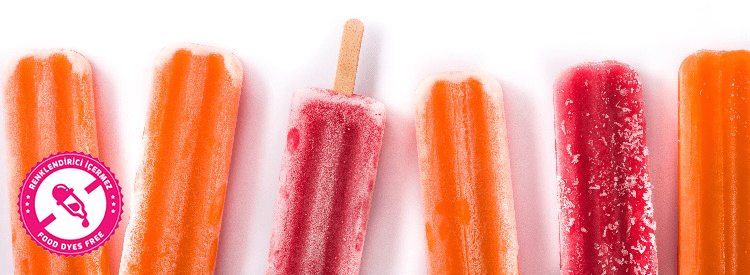
Those brightly colored candies your child loves, the vibrant orange of the fruit soda you drink, the perfect strawberry red of the jam you eat for breakfast... Behind all these colors lies either nature’s own palette or chemicals synthesized in a laboratory. The “No Artificial Colors” label comes into play precisely at this point and offers consumers a choice. So what does this label actually mean, and which color additives does it cover?
The “No Artificial Colors” label is a statement declaring that no food coloring has been added to a food product’s formulation. This label guarantees that neither synthetic nor naturally derived colorants have been used. Food colorings are used to restore color lost during processing, add visual appeal to colorless products, or ensure color consistency across products. However, in recent years, consumer demand for “clean labels” and the association of certain synthetic colorings with hyperactivity in children have significantly increased interest in products that are free of colorings.
Natural and Synthetic Dyes: Both Are Dyes
The most commonly misunderstood aspect of the “no colorants” label is the concept of “natural colorants.” Many consumers believe that colorants derived from natural sources are not considered food additives. However, from a regulatory standpoint, natural colorants are also food additives and are identified by an E number.
Synthetic Colorants
Produced through chemical synthesis in a laboratory setting. They offer vivid, bright, and heat-resistant colors. They have a low production cost and high color consistency. Dyes such as tartrazine (E102), sunset yellow (E110), azorubine (E122), and brilliant blue (E133) fall into this group. Some may cause allergic reactions and hyperactivity in children.
Natural Colorants
They are derived from plant, vegetable, fruit, or mineral sources. Their colors are more pastel and natural-toned compared to synthetic ones. They are more sensitive to heat and light. Examples in this group include beta-carotene (E160a), chlorophyll (E140), anthocyanin (E163), and curcumin (E100). Just because they are natural does not necessarily mean they are safer than synthetic ones; some may be allergens.
As this comparison shows, the “no artificial colors” label guarantees that neither synthetic nor natural colorants are used. If a product contains only natural colorants, this is indicated on the label as “contains natural colorants” or with the relevant E number; it cannot bear the “no artificial colors” label.
The Most Common Food Colorants and E Numbers
On food labels, colorants are listed by their chemical names or E numbers. The table below shows the most commonly encountered food colorants, their sources, and their uses:
| E Number | Colorant Name | Color | Source | Products Where It Is Most Commonly Found |
|---|---|---|---|---|
| E100 | Curcumin | Yellow-orange | Derived from the turmeric plant (natural) | Curry powder, margarine, cheese, mustard, instant soups |
| E102 | Tartrazine | Lemon yellow | Synthetic azo dye | Candies, carbonated beverages, ice cream, prepared desserts |
| E120 | Carmine (Carmic Acid) | Dark red | Derived from cochineal insects (animal-based) | Fruit-flavored yogurts, candies, beverages, cosmetics |
| E133 | Brilliant Blue | Blue | Synthetic | Candies, ice cream, beverages, canned peas |
| E150a-d | Caramel | Brown | Obtained by heating sugar | Cola, soy sauce, vinegar, bread, beer, whiskey |
| E160a | Beta-Carotene | Orange-yellow | Carrots, sweet potatoes, algae (natural) | Margarine, butter, cheese, fruit juices |
| E162 | Betanin (Beet Red) | Red-purple | Derived from beetroot (natural) | Ice cream, yogurt, candies, beverages |
| E163 | Anthocyanins | Red-purple-blue | Grape skins, red cabbage, blueberries (natural) | Beverages, jams, candies, dairy products |
Critical Warning for Vegan Consumers: E120 (carmine) is an animal-derived colorant obtained from the cochineal insect. Yogurt, candies, and beverages that are red in color and do not carry a “No Artificial Colors” label are highly likely to contain E120. This colorant is absolutely unsuitable for vegans.
Legal Basis for the “No Artificial Colors” Label
The Turkish Food Codex Regulation on Food Additives details which food colorings may be used in which foods and at what maximum limits. The “No Colorants” claim guarantees that the product’s formulation contains none of the food colorants defined in the regulation. A manufacturer who includes this claim on the packaging must prove this assertion through laboratory analyses during inspections.
The inspection process consists of the following stages:
- Formulation and Recipe Review: The manufacturer submits a list of all raw materials used, along with their technical specifications, to the inspection body. It is documented that none of the raw materials contain food colorants.
- Production Line Inspection: If other products containing colorants are manufactured at the same facility, cleaning procedures to prevent cross-contamination are verified.
- Laboratory Analyses: Product samples are tested for the presence of colorants using HPLC or spectrophotometric methods. Water-soluble synthetic dyes and natural pigments are screened separately.
- Periodic Re-inspection: Compliance is monitored through annual routine inspections and unannounced sampling after certification.
The Phrases That Confuse Consumers the Most
You may come across many different label statements regarding color additives on supermarket shelves. Each of these statements has a different meaning:
“Contains No Color Additives”
This statement guarantees that the product contains no food color additives. It covers both synthetic and natural color additives. It is the most comprehensive and reliable statement.
“Contains No Artificial Colorants”
This statement indicates that only synthetic colorants have not been used. Natural colorants (such as beta-carotene, chlorophyll, and anthocyanins) may have been used.
“Contains Natural Colorants”
Indicates that only naturally derived colorants are used in the product. No synthetic dyes are used, but the product still contains colorants.
“Does Not Contain Azo Dyes”
This guarantees that only synthetic dyes from the azo group (such as tartrazine and sunset yellow) have not been used. Other synthetic or natural colorants may be present.
A Strategy for Reading Colorant Labels for the Informed Consumer
For consumers who wish to choose products without colorants, the following strategy will help them make more informed decisions while shopping:
- Recognize all E-codes from E100 to E199 as food colorings. All additives in this range are food colorings. E100–E109 covers yellow, E110–E119 orange, E120–E129 red, E130–E139 blue, E140–E149 green, and E150–E159 brown and black shades.
- Distinguish between “contains no colorants” and “contains no artificial colorants.” The former excludes all colorants, while the latter excludes only synthetic ones.
- Pay special attention to the “Southampton Six.” The color additives E102, E104, E110, E122, E124, and E129 have been linked to hyperactivity in children and are required to carry a special warning label.
- Don’t be fooled by a product’s natural color. The vast majority of processed foods with bright, vivid colors contain food coloring. A candy or soda without food coloring is usually duller and paler in color.
- If you’re vegan, be on the lookout for E120. Carmine is derived from insects and is particularly common in pink- and red-toned yogurt, ice cream, and candies.
- Ask about the use of food colorings at restaurants and bakeries. Brightly colored cake frostings, ice creams, and specialty drinks, in particular, may contain high amounts of synthetic food colorings.
The “No Color Additives” label, is one of the clearest messages for consumers among food labels. When you see this label, you can be sure the product contains no food coloring—neither synthetic nor natural. The product’s color comes solely from its natural ingredients. For families with children in particular, this label is the most practical way to avoid synthetic dyes that carry a risk of hyperactivity. Remember that the safest food color is the one that comes from nature’s own palette.