























Cruelty-Free Bathroom Cleaners: Animal Testing and Product Selection
Cruelty Free Bathroom Cleaners
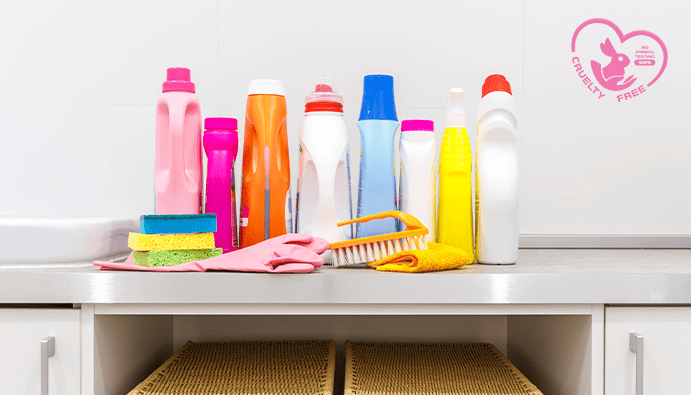
“Cruelty-free” means that animals are not intentionally used for testing at any stage of a product’s development and production process. This definition covers not only the final product but also every ingredient in the formulation and every link in the supply chain. When it comes to bathroom cleaners, this scope expands. This is because these products contain ingredients that are difficult to combine in a single formulation: acidic limescale removers, basic grease removers, oxidizing bleaches, disinfectants, and antifungal actives. The supply chain for each ingredient group is evaluated separately in the cruelty-free certification process. Household chemicals have historically been subject to comprehensive testing under chemical safety regulations. The acidic ingredients, alkaline ingredients, and disinfectants used in bathroom cleaners have been evaluated for acute toxicity, skin and eye irritation, respiratory tract irritation, and chronic exposure. A significant portion of these evaluations was based on tests conducted on animals throughout the 20th century. In particular, skin and eye irritation tests have been widely applied to surfactants and acidic components used in bathroom cleaners. While many countries now have bans on animal testing for cosmetic products, tests conducted under chemical safety regulations are subject to different rules. Unlike cosmetic products, bathroom cleaners are classified as “household chemicals.” Therefore, “cruelty-free” certification is based on the principle that the current production process does not require new animal testing and that no intentional animal testing is conducted in the supply chain, rather than on a declaration of an absolute ban on animal testing as seen with cosmetic products. Bathroom cleaners differ from other household cleaning products in terms of their formulation structure. The groups of ingredients found together in these products create areas that must be evaluated separately from both technical and ethical perspectives. Lime and rust buildup on bathroom surfaces are typically dissolved using acidic ingredients such as citric acid, lactic acid, phosphoric acid, or hydrochloric acid. Each of these ingredients comes from different supply chains, and the testing history of the intermediate chemicals used in their production processes must be documented. Citric acid and lactic acid can be produced through both plant-based fermentation and synthetic methods; in both cases, a source declaration is required. Quaternary ammonium compounds, sodium hypochlorite, hydrogen peroxide, and certain phenol derivatives are used to provide disinfection in bathroom cleaners. The supply chain for these active ingredients is an area that requires particular attention in cruelty-free certification. Some disinfectants have a comprehensive historical testing history, and this is evaluated separately during the certification process. Active ingredients used to prevent mold growth in humid environments such as bathrooms include sodium hypochlorite, benzalkonium chloride, and certain organic acids. The testing history of these ingredients must be documented for both the final product and the supply chain. In particular, mold inhibitors that provide long-term effectiveness may be subject to additional evaluations under chemical safety regulations. Animal-free testing methods have become significantly more widespread in recent years for the safety assessment of household chemicals. These methods offer significant advantages both from an ethical standpoint and in terms of scientific accuracy. In vitro cell culture tests involve evaluations conducted on human cells grown in a laboratory setting. Artificial skin and cornea models allow for the observation of the potential irritating effects of bathroom cleaners on the skin and eyes without the use of animals. Computer-aided modeling can predict a chemical’s toxic effects based on its molecular structure. Human volunteer panels, on the other hand, are used to evaluate a product’s effects under real-world usage conditions. There are a few practical tips for those who want to choose a cruelty-free bathroom cleaner. First, check the certification logo on the product and verify whether it belongs to an independent certification body. There is a difference in reliability between a symbol designed by the brand itself and an independent certification. Reading the ingredient list is also important. Lanolin, beeswax, and certain protein derivatives may be present in bathroom cleaners. The fact that a product is labeled as “natural” or “plant-based” does not necessarily mean it is free of animal-derived ingredients. Therefore, the certification logo and the ingredient list are two essential sources of information that should be evaluated together. A “cruelty-free” bathroom cleaner certification is not just a label for brands; it’s a tool that encourages more transparent management of production processes. In a formulation containing numerous active ingredients, documenting the testing history of each ingredient requires a comprehensive supply chain analysis. This certification also offers consumers the opportunity to make an informed choice. Rather than focusing solely on a bathroom cleaner’s cleaning power and scent, it becomes possible to evaluate the ethical commitment behind the product. This shifts product selection to a more holistic foundation for both the brand and the consumer. Due to their powerful formulations and numerous active ingredients, bathroom cleaners represent one of the most technically comprehensive areas of cruelty-free certification. From limescale removers to disinfectants, and from mold inhibitors to surfactants, the supply chain and testing history of each individual ingredient are evaluated separately during the certification process. With the advancement of animal-free testing methods and growing consumer awareness, this category is becoming more transparent for both brands and consumers. Every step taken in this process represents a concrete choice that ensures no other living beings are harmed while we clean our homes.
Bathroom cleaners are among the categories of household cleaning products with the most aggressive formulations. Limescale removers, mold inhibitors, and disinfectants contain strong acidic or basic components, and these components are subject to comprehensive evaluations under chemical safety regulations. In this article, we discuss what “cruelty-free” certification means specifically for bathroom cleaners, the history of animal testing in this category, and the current state of animal-free testing methods.
The Concept of “Cruelty-Free” and the Scope of Bathroom Cleaners
The History of Animal Testing in Bathroom Cleaners
The Unique Ingredient Groups in Bathroom CleanersLime and Rust Removers
Disinfectant Active Ingredients
Mold-preventing ingredients
Animal-Free Testing Methods and Household Chemicals
What to Look for When Choosing a Bathroom Cleaner
The contribution of certification to the bath cleanser category
CLICK HERE TO GET A PRICE OFFER.