























Cruelty-Free Furniture Certification: Material-Based Audit
Cruelty-Free Furniture Certification
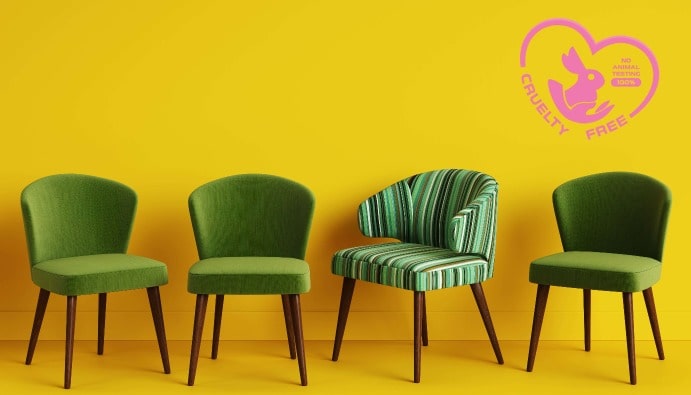
Cruelty-free furniture certification is an independent endorsement that verifies that no animal-derived components are used in the production of a furniture product and that no animal testing is conducted at any stage of the production process. This certification differs from cruelty-free certification in the cosmetics or food sectors in two key ways. First, since furniture products do not come into direct, prolonged contact with the skin, the scope of toxicological assessment focused on human health is narrower. Second, since furniture production involves a wide variety of material groups (wood, metal, textiles, leather, fillers, adhesives, paint, varnish), supply chain verification is conducted across a broader spectrum. These two characteristics place furniture certification within a unique audit framework. The use of animal-derived materials in a furniture product manifests in different categories. Each category requires a unique audit approach during the certification process. Below, we discuss the most common material categories in furniture production and the certification requirements associated with these categories. Leather used in furniture upholstery is clearly of animal origin and is not accepted under cruelty-free certification. However, some materials offered as alternatives to leather may also indirectly contain animal-derived components. For example, certain products labeled as “faux leather” or “artificial leather” may contain animal protein-based coating materials in their production process. Declarations required for upholstery materials during the certification process must cover the material’s chemical composition, production method, and, if applicable, the source of any coating materials. For fabric upholstery, it must be documented that no animal-derived fibers—such as wool, silk, mohair, cashmere, or angora—are used. The materials used in furniture fillings are one of the areas most frequently overlooked during the certification process. Natural filling materials such as wool, horsehair, bird feathers, and goose down are of animal origin and are not accepted under the cruelty-free certification. Polyurethane foams, latex foams, and polyester fibers used as alternatives to these materials, however, contain no animal-derived content. However, there is one point to note: In the production of some filling materials, animal-derived fatty acids or surfactants may be used to open the cell structure. The use of such additives must be clearly stated in the supplier’s declarations. Adhesives used in furniture production represent the most critical and difficult-to-verify area in cruelty-free certification. Among traditional wood adhesives are those known as animal glues, which are derived from animal bones, hides, or fish byproducts. These types of adhesives are widely used, particularly in traditional furniture production and restoration work. In modern furniture production, however, synthetic adhesives based on polyurethane, PVA (polyvinyl acetate), and epoxy are preferred. These adhesives generally do not contain animal-derived ingredients, but their formulations may include animal-derived components as additives. During the certification process, a separate supplier declaration must be obtained for each type of adhesive. Paints, varnishes, and finishes used on furniture surfaces are another area that can be overlooked in cruelty-free certification. Some traditional types of varnishes and finishes may contain animal-derived resins or waxes. In particular, beeswax-based finishes and the natural resin known as shellac may be of animal origin. Shellac is a natural resin derived from the secretion of the lac insect and is widely used as a wood surface protectant. Beeswax, on the other hand, is a bee product and is therefore not accepted in cruelty-free certification. Synthetic acrylic, polyurethane, or water-based varnishes should be preferred as alternatives to these materials. In furniture “cruelty-free” certification, the production process is evaluated not only based on the materials used but also on the production methods. This evaluation is particularly important in traditional production techniques that require handcrafting. None of the materials used in furniture production should have been tested on animals during development or quality control processes. This requirement applies particularly to newly developed synthetic coating materials and adhesives. The manufacturer is required to obtain a declaration of testing history from material suppliers. If both furniture containing animal-derived materials and cruelty-free furniture are produced in the same manufacturing facility, production lines must be physically separated or cleaning procedures must be verified. This requirement is of critical importance, particularly in areas shared with leather processing and wool weaving lines. It is not sufficient to simply obtain a supplier declaration for each material used in furniture production. During the certification process, these declarations must be verified through sampling, on-site audits of supplier facilities, or independent analyses to confirm material composition. All claims made on furniture product labels, user manuals, and marketing materials must be consistent with the scope of certification. The use of terms such as “vegan leather,” “animal-friendly,” or “cruelty-free” is limited solely to certified products. Cruelty-free furniture certification consists of sequential stages, each of which is evaluated independently. The process begins with the manufacturer’s application and concludes with the issuance of the certification decision. During the application stage, the manufacturer submits its product portfolio, a list of all materials used, and a supply chain map to the certification body. In this stage, the product category and potential risk areas are identified. In the second stage, supplier declarations are collected and verified for each material. This stage is the most time-consuming, particularly when adhesives and surface treatment agents are involved. In the third stage, the collected documents are reviewed for completeness and consistency. If any incomplete or conflicting declarations are identified, the manufacturer is asked to provide supplementary information. The fourth stage involves an on-site audit of the production facility. During this audit, production lines, material storage areas, quality control processes, and the record-keeping system are examined. In the fifth and final stage, all findings are evaluated, and a final decision is made. The cruelty-free furniture certificate is valid for one year. The manufacturer’s compliance obligations continue throughout the certificate’s validity period. During the annual renewal process, the manufacturer is required to submit updated material declarations, production records for the past year, and, if applicable, documentation regarding product changes. If a new furniture model is added to the product portfolio, that model cannot be included in the scope of the certificate until its material declarations have been approved. If the supplier of an existing material changes, the new supplier’s declaration must be submitted to the organization. The certified manufacturer is expected to adhere to the ban on animal testing and the principle of not using animal-derived materials in all production activities covered by the certification. Cruelty-free furniture certification requires comprehensive supply chain verification due to the furniture industry’s multi-layered material structure. Each material category—from upholstery to fillers, adhesives to surface treatment agents—is evaluated according to its specific audit requirements. The certification decision is based not only on current production conditions but also on a comprehensive review of the supply chain and production methods. This framework ensures that the “cruelty-free” claim made to consumers is backed by verifiable, traceable, and sustainable assurance.
The furniture industry is one of the sectors where animal-derived materials are used in the most invisible ways. It’s easy to tell that a chair’s upholstery is made of leather; however, it’s much harder to notice that the chair’s internal padding contains wool, its seat springs use animal-based glue, and its covering features silk or linen fabric. Cruelty-free furniture certification aims to bring transparency to precisely this hidden area. In this article, we examine the material categories specific to the furniture industry and the technical requirements each category entails for certification.
Scope of Certification and Its Position in the Industry
Material Categories and Audit Requirements
Upholstery MaterialsFilling and Foam Materials
Adhesives and Binding Agents
Paints, Varnishes, and Surface Treatment Products
Evaluation Criteria Related to the Production ProcessBan on Animal Testing
Cross-Contamination Control
Verification of Supplier Declarations
Labeling and Declaration Consistency
Structure of the Certification Process
Certificate Validity and Continuity Conditions