























Cruelty-Free Nail Polish Certification: Manufacturers’ Most Frequently Asked Questions
Cruelty Free Nail Polish Certificate
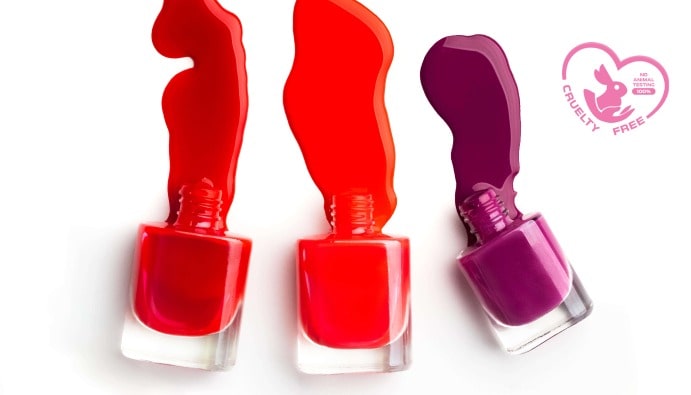
As a nail polish brand, you want to obtain cruelty-free certification. You’re certain your formulation hasn’t been tested on animals. So, what questions will the certification body ask you? What documents will they request? Where might the process hit a snag, and where might it move more quickly? In this article, we’ve compiled the questions manufacturers ask most frequently about cruelty-free nail polish applications and the answers we provide as a certification body.
Is it enough to simply prove that the final product wasn’t tested on animals?
No, that is definitely not enough. This is the most common misconception we encounter. Declaring that your finished nail polish has not been tested on animals is only the first step toward certification. A cruelty-free certification guarantees that every single raw material in your formulation also has no history of animal testing.
If even a single solvent, resin, or pigment used in a nail polish has been tested on animals at any point in the supply chain, your product cannot receive a cruelty-free certification. Therefore, during the certification process, each ingredient must be evaluated individually, and its testing history must be documented. Nail polish formulations typically consist of between 20 and 40 ingredients, which directly broadens the scope of the audit.
My supplier says, “This ingredient has been on the market for years and has not been tested.” Is this statement sufficient?
A verbal statement is not sufficient. During the certification process, you must request a written and signed test history declaration form from your supplier. This form requires the supplier to declare that the ingredient they produce has not been subjected to any animal testing in the past five years and to sign this declaration.
However, there is a nuance here. Even if your supplier knows that the ingredient they produce has not been tested, they may not know whether the raw materials used to produce that ingredient have been tested. For example, a resin supplier may not be aware of whether the monomers used to produce the resin were tested in the past. In this case, the declaration form must be expanded to cover sub-suppliers, and, if possible, documentation from the sub-suppliers must also be collected.
I want to submit my product for testing. Which tests are accepted under the “cruelty-free” criteria?
This question is one of the most critical points of distinction in the application process. You may need to conduct tests to evaluate product safety; however, these tests must be performed without the use of animals. The methods we accept for certification consist of internationally recognized, animal-free alternative tests.
In vitro cell culture tests involve evaluations conducted on artificial tissue models derived from human skin or corneal cells. In silico modeling, on the other hand, provides computer-aided toxicity predictions. Human volunteer panel tests are conducted in accordance with protocols approved by an ethics committee. All of these methods allow you to conduct safety assessments without using animals.
However, there is one point we must emphasize: If you have ever sent your product to a laboratory that conducts animal testing—even in the past—it will directly affect your certification process. If it is determined that you have worked with a laboratory that conducts animal testing within the last five years, certification cannot be granted even if your current product has not been tested. This rule stems from the fact that the manufacturer’s testing preferences are evaluated as part of a comprehensive ethical commitment.
I changed my formulation. Is my certification still valid?
A formulation change is one of the situations requiring the most attention during the certification process. The process proceeds differently depending on the nature of the change you’ve made. If you’ve only adjusted the proportion of an existing ingredient and haven’t added a new one, simply notifying the certification body is sufficient; your certification remains valid.
However, if you have added a new ingredient to the formulation, the certification cannot remain valid until the testing history for that ingredient is documented. You must obtain a testing history declaration form from the supplier of the new ingredient, collect documentation from sub-suppliers if necessary, and submit these documents to the certification body. Producing the product with the new formulation without prior approval will result in the suspension of the certification.
Another frequently asked question is: What happens if I completely remove an existing ingredient and replace it with a new one? In this case, the new ingredient is evaluated as if it were a new application. The test history documents must be submitted in full, and approval must be obtained.
I sell my product abroad. In which countries does selling my product affect my certification?
This is one of the issues that causes the most confusion among manufacturers. A cruelty-free certification does not permit sales in markets where animal testing is legally required. In some countries, animal testing is required for the import of cosmetic products. A brand selling to these countries cannot obtain a cruelty-free certification, or its existing certification will be revoked.
You must clearly specify your target markets during the application process. We recommend reviewing the cosmetic regulations of the countries where you sell to determine which markets require animal testing. If you sell in any of these markets, you must either withdraw from that market or resubmit your certification application to exclude that market. It is not possible to maintain both simultaneously.
How long is my certification valid, and how does the renewal process work?
The cruelty-free nail polish certification is valid for one year. The renewal process begins at the end of each year. Renewal takes less time than the initial application but is conducted with the same thoroughness. The process reviews whether there have been any changes in your production process, supplier list, or formulation within the past year.
During the renewal process, you will be required to provide an up-to-date test history statement, production records for the past year, and, if applicable, documentation regarding any formulation changes. We would also like to remind you that we reserve the right to conduct unannounced audits throughout the certificate’s validity period. During these audits, we may visit your production facility, review your records, and verify your supplier declarations.
We recommend that you submit your renewal application at least two months before the certificate’s expiration date. This timeframe allows sufficient time to complete any missing documents and schedule audits.
What happens if I lose my certificate or violate its terms?
The certificate remains valid as long as you maintain compliance with the certification criteria. If any nonconformity is identified, a corrective action plan is first requested. If the deficiency is resolved within a reasonable timeframe, the certificate is suspended but not revoked. However, if the nature of the violation is severe or recurring, the certificate is revoked.
What constitutes a serious violation? These include the detection of animal testing, making false declarations, beginning sales in a market where animal testing is mandatory, and the discovery that supplier declarations are fraudulent. In such cases, the certificate is immediately revoked, and the brand is added to the certification body’s public list of violations.
What can I do to expedite my application?
This is one of the questions we hear most often. The most effective way to expedite the application process is to complete all your preparations thoroughly before submitting your application. Collecting test history declaration forms from your suppliers in advance, reviewing your formulation ingredient by ingredient, and researching alternative suppliers for any high-risk ingredients—if applicable—will significantly shorten the process.
We also recommend scheduling a preliminary meeting with the certification body at the start of the process. During this meeting, you can share your formulation, learn which ingredients are subject to special scrutiny, and identify potential issues in advance. A preliminary meeting can reduce the total duration of the application process by an average of one-third.
A cruelty-free nail polish certification is not just a document; it is a tool that conveys your brand’s ethical stance to consumers. The common thread among the questions we encounter most frequently during this process is that manufacturers want to understand the process from start to finish and avoid any surprises. As a certification body, our mission is to make this process as predictable as possible and to be by your side every step of the way. Feel free to reach out to us with any questions at any stage of your application.
To stay updated on our latest blog posts, follow our Instagram account.