























Soap and Animal Testing: Cruelty-Free Certification
Cruelty Free Soap Certificate
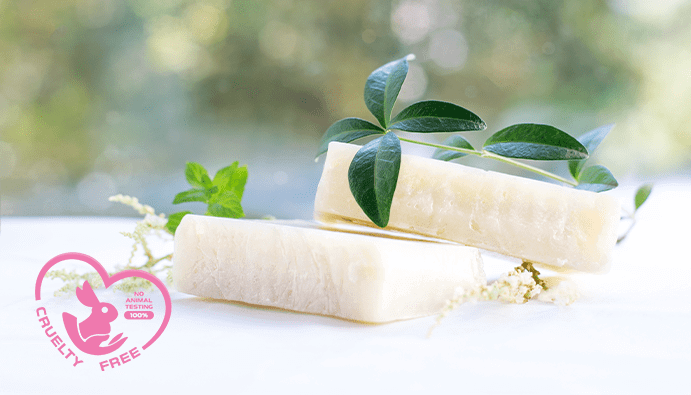
Animal testing refers to experiments conducted on animals to assess the safety of cosmetic products and their ingredients. When it comes to soap, these tests have a historical background due to several category-specific reasons. First and foremost is the fact that soap comes into direct and repeated contact with the skin. Hands are washed dozens of times a day, and the body is regularly cleansed with soap. This repeated contact can have cumulative effects on the skin barrier. For this reason, parameters such as skin irritation, allergic reactions, and dryness have historically been evaluated through tests conducted on animals. The second reason is the risk of soap coming into contact with the eyes. Face and hand soaps, in particular, may come into contact with the area around the eyes. For this reason, eye irritation tests have also been conducted specifically for the soap category. Soap formulations contain various ingredients that can cause irritation when they come into contact with the skin. Surfactants, alkaline substances, fragrance components, and preservatives fall into this category. In the past, extensive animal testing was conducted to evaluate the effects of these ingredients on the skin and eyes. Among the methods used were applying soap to the shaved skin of laboratory animals and then monitoring the skin reaction for days. In eye irritation tests, the animals’ eyelids were held open while a soap solution was applied directly to the eye. These tests were viewed as both severely painful and scientifically questionable practices. For products like soap that come into repeated contact with the skin, a “cruelty-free” certification requires not only that the final product not be tested on animals but also that every single ingredient in the formulation have no history of animal testing for skin or eye irritation. This means additional documentation is required, particularly for surfactants and fragrance components. The historical foundation of soap production lies in the saponification process, which occurs when animal fats react with alkaline substances. Tallow (beef or sheep tallow) has historically been the most commonly used raw material for soap. In modern soap production, however, vegetable oils (coconut, palm, olive, sunflower) are widely used. Nevertheless, fatty acids of animal origin may still be present in some soap formulations. Fatty acids such as stearic acid, oleic acid, and palmitic acid can be derived from both plant and animal sources. The source of these ingredients is additionally verified in cruelty-free certification. Since lard forms the historical foundation of soap production, it represents one of the raw materials with the most extensive testing history in the cosmetics industry. The effects of this fat on the skin and the safety profile of the product formed after saponification have been evaluated through historical animal testing. In modern cruelty-free certification, the use of tallow and its derivatives is not permitted. Soap’s cleansing property comes from surfactants. In traditional soaps, this function is performed by fatty acid salts formed as a result of saponification. In modern synthetic soaps, however, surfactants such as sodium lauryl sulfate (SLS), sodium laureth sulfate (SLES), and cocamidopropyl betaine are used. Surfactants constitute one of the most extensively tested groups of ingredients in the cosmetics industry. These substances interact directly with the skin barrier and can cause irritation at high concentrations. In the past, the effects of these ingredients on the skin and eyes were tested on animals. The traditional saponification process occurs when fats react with sodium hydroxide or potassium hydroxide. The glycerin produced during this process provides the soap’s moisturizing properties. In modern production, glycerin may also be added separately. Whether this glycerin is plant-based or animal-derived is additionally verified in cruelty-free certification. Unlike ordinary soaps, antibacterial soaps contain active ingredients that inhibit bacterial growth. Triclosan, triclocarban, benzalkonium chloride, and certain natural extracts fall into this category. The antibacterial efficacy of these active ingredients has historically been evaluated through microbiological tests conducted on animals. Triclosan, in particular, is one of the most controversial antibacterial active ingredients in the cosmetics industry due to its testing history. Both the antibacterial efficacy and long-term safety of this compound have been subject to extensive animal testing. In cruelty-free certification, the supply chain and testing history of these active ingredients are also examined. Soaps contain numerous fragrance ingredients to impart a pleasant scent. Since these ingredients come into direct contact with the skin, they are specifically evaluated for their potential to cause allergic reactions. Fragrance ingredients constitute one of the groups of ingredients with the highest potential for allergic reactions in the cosmetics industry. Fragrance ingredients have historically been subject to extensive animal testing. Skin sensitization tests and allergic reaction assessments have been widely applied to this group of ingredients. Today, in cruelty-free certification, a separate testing history declaration is required for each of these ingredients. Soap is a product susceptible to microbiological spoilage due to its water content and method of use. Liquid soaps, in particular, contain preservative systems. Phenoxyethanol, sodium benzoate, potassium sorbate, and parabens fall into this group. These preservatives themselves are not of animal origin; however, it must be documented that no animal testing was conducted during their production processes. Additionally, chitosan or lysozyme may be used as natural preservatives in some soap formulations. Chitosan is derived from the shells of crustaceans; lysozyme is derived from egg whites. These ingredients are of animal origin and prevent cruelty-free certification. At the core of “cruelty-free” certification is the principle that the manufacturer must not have conducted any animal testing in the past five years. This principle applies not only to the final product but also to every ingredient in the formulation and any auxiliary materials used in the production process. When it comes to soap, this principle is particularly important because the category encompasses both historical and modern production methods. Documenting that no animal testing has been conducted—both for skin compatibility and antibacterial efficacy—is a critical requirement from both an ethical and scientific standpoint. Animal-free testing methods have become significantly more widespread in recent years for products like soap that come into repeated contact with the skin. These methods eliminate the use of animals while yielding results that more closely mimic human biology. Artificial skin models are three-dimensional tissue models produced from human skin cells. Tests conducted on these models allow for the evaluation of a soap formulation’s potential irritating and drying effects on the skin. Artificial cornea models are used to assess irritation that may occur following contact of the product with the eye. Microbiological culture tests evaluate antibacterial efficacy without using animals. Computer-aided modeling can predict the potential effects of a compound based on its molecular structure. Human volunteer panels are used to evaluate the product’s performance under real-world conditions, its cleansing efficacy, and its skin compatibility. There are a few practical tips for those who want to choose a “cruelty-free” soap. First, check the certification logo on the product and verify whether it belongs to an independent certification organization. There is a difference in reliability between a symbol designed by the brand itself and an independent certification. Reading the ingredient list is also important. Ingredients such as sodium tallowate (animal fat salt), sodium lanolate (lanolin salt), beeswax, propolis, silk protein, chitosan, and lysozyme may be found in soaps. The use of animal fats is particularly common in handmade soaps produced using traditional methods. Additionally, the source of fatty acids—such as stearic acid, oleic acid, and palmitic acid—requires careful consideration. For this reason, the certification logo and the ingredient list are two essential sources of information that should be evaluated together. A “cruelty-free” soap certification is not merely a label for brands; it is a tool that encourages more transparent management of production processes. In a formulation that combines fatty acids, surfactants, fragrance components, and preservatives, documenting the source and testing history of each ingredient requires a comprehensive supply chain analysis. This certification also offers consumers the opportunity to make an informed choice. Rather than judging a soap solely by its scent and lather, it becomes possible to evaluate the ethical commitment behind the product. This shifts product selection to a more holistic foundation for both the brand and the consumer. Soap is a product category that has historically been produced using animal fats and may still contain animal-derived ingredients in some formulations today. For this reason, it occupies a unique position regarding animal testing and animal-derived ingredients. From skin irritation tests to eye irritation assessments, and from the testing history of tallow to the examination of modern surfactants, every stage is specifically addressed in cruelty-free certification. Antibacterial soaps, fragrance components, and preservative systems are evaluated under separate headings as category-specific topics. With the advancement of animal-free testing methods and growing consumer awareness, this category is becoming more transparent for both brands and consumers. Every time you wash your hands, you’re making a choice; the production process behind that choice is just as important as the product itself.
Soap is one of the oldest chemical products in human history. For centuries, it was produced using animal fats and alkalis derived from wood ash. Today, however, soap has evolved into a broad category of products made from vegetable oils, synthetic surfactants, and numerous additives. This historical background gives soap a unique position in cruelty-free certification. In this article, we examine the history of animal testing specifically related to soap, the identification of animal fat derivatives, and the current state of animal-free testing methods.
Why do animal tests in soap have a historical background?
The history of skin irritation and eye irritation testing on animals
Animal Fat Derivatives and Testing HistoryLard and its historical testing history
Surfactants and animal testingThe Saponification Process and Modern Production
Antibacterial Soaps and Animal Testing
Fragrance Ingredients and Animal Testing
Preservatives and Microbiological Safety
The Significance of Avoiding Animal Testing
Animal-Free Testing Methods and Soap
What to Look for When Choosing Soap
The contribution of certification to the soap category
CLICK HERE TO GET A PRICE OFFER.