























Genetically Modified Organisms and Labeling Regulations
GMO Free Analysis
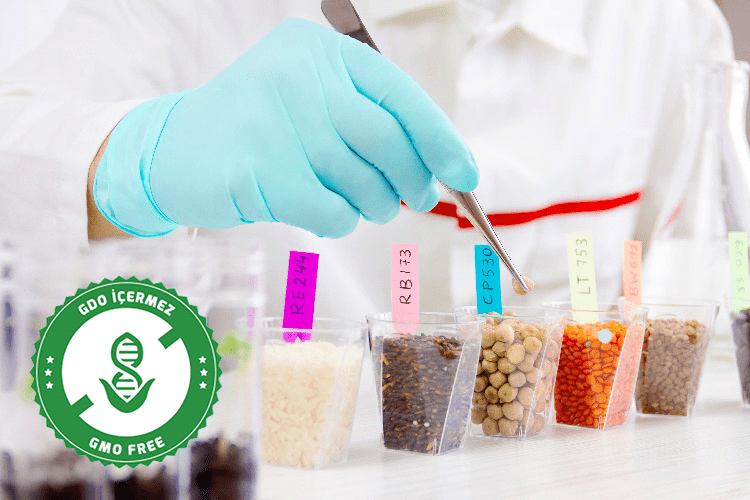
The packaging of the corn chips you bought off the supermarket shelf says “GMO-free.” This statement leads you to believe that the product is completely natural and made from raw materials that haven’t been genetically modified. But does this label really offer an absolute guarantee, or does it allow for the presence of GMOs below a certain threshold? The “GMO-free” label is one of the most sought-after yet most misunderstood statements in the world of food labeling.
The “GMO-free” label states that a food product contains no ingredients derived from genetically modified organisms (GMOs) or that the amount of GMOs it contains is below a legally established threshold. This label is of critical importance, particularly for foods containing the world’s most common GMO crops, such as soy, corn, canola, cottonseed oil, and sugar beets. However, the most important point to understand here is that the phrase “GMO-free” does not usually mean “zero GMOs.” Regulations technically allow for a certain tolerance level for unavoidable and accidental GMO contamination.
Legal Threshold Values and GMO Labeling Regulations
The legal framework for “GMO-free” labeling varies significantly from country to country. While the European Union has the world’s strictest regulations on GMO labeling, in some countries—such as the United States—GMO labeling is subject to much more flexible rules. Turkey, on the other hand, has largely adopted European Union regulations.
| Region / Country | Labeling Threshold | Scope | Animal Products |
|---|---|---|---|
| European Union | 0.9% (per ingredient) | All food and feed derived from GMOs must be labeled. | Meat, milk, and eggs derived from animals fed GMO feed are not required to be labeled. |
| Turkey | 0.9% (per ingredient) | Compliant with EU regulations. Labeling of products containing GMOs is mandatory. | There is no labeling requirement for products derived from animals fed GMO feed. |
| United States | 5% (on a product basis) | “Bioengineered” labeling is required, but the threshold is higher than in the EU. | Products derived from animals fed GMO feed are exempt. |
| Japan | 5% (for the top three ingredients) | The three ingredients with the highest GMO content must be labeled. | Some animal products and processed foods are exempt. |
As can be seen from this table, the 0.9 percent threshold in the European Union and Turkey has been set to accommodate technically unavoidable contamination. This means that even if a product is labeled “GMO-free,” each of its ingredients may contain up to 0.9 percent GMO residues. The reason for this tolerance is that it is neither technically nor economically feasible to completely prevent cross-contamination that may occur during pollination, transportation, storage, and processing in the agricultural production chain.
Products Permitted and Prohibited Regarding GMOs in Turkey
GMO regulations in Turkey are governed by the Biosafety Law and related regulations. The legislation imposes strict rules regarding the import, processing, and marketing of GMO products. Below are two main categories summarizing the current situation in Turkey:
Products Permitted as GMO Animal Feed
In Turkey, the import of certain GMO soybean and corn varieties is permitted solely for use as animal feed. The use of these products as food or their release into the environment is strictly prohibited. A strict monitoring system is in place to prevent GMO products imported for animal feed from entering the human food chain.
Products Prohibited for Use as Food
In Turkey, no GMO product is permitted for use as food or as a food ingredient. The import, production, and sale of GMO corn, soybeans, canola, cotton, and sugar beets for human consumption are prohibited. This ban covers all food categories, including infant formula and foods for special medical purposes.
Analytical Methods Used for GMO Detection
For a product to carry a “GMO-free” label, it must be proven through analyses conducted by independent, accredited laboratories that the presence of GMOs is below the legal threshold. There are two main methods used for GMO detection:
PCR (Polymerase Chain Reaction)
It is considered the gold standard for GMO detection. It searches for GMO-specific genetic sequences by amplifying the DNA in the product millions of times. With quantitative PCR, the GMO content can be determined as a percentage. Its sensitivity can reach as low as 0.01%.
ELISA (Protein-Based Test)
It detects specific proteins expressed in GMO plants using antibodies. It is faster and more cost-effective than PCR; however, it does not always provide reliable results because proteins in processed foods may be degraded.
Next-Generation Sequencing
This advanced technology, which enables the screening of the entire genome, allows for the detection of even unknown GMO varieties. It has not yet become widespread in routine analyses but is a method that provides definitive results when used in suspicious cases.
Rapid Strip Tests
These are simple kits, similar to pregnancy tests, used for raw material inspection in the field or at factory entrances. They provide results in a few minutes but offer only qualitative results; they indicate whether GMOs are present but cannot determine their quantity.
Limitations of the “GMO-Free” Label and Consumer Misconceptions
The “GMO-free” label is a statement that is often misinterpreted by consumers or perceived as having a broader scope than it actually does. Below are the four most common misconceptions and the actual facts:
“If it’s ‘non-GMO,’ then it must be completely natural.”
The “non-GMO” label pertains solely to genetic modification. The product may contain pesticide residues, artificial preservatives, or synthetic additives. The “natural” label and the “non-GMO” label mean different things.
“The ‘non-GMO’ label means zero GMOs.”
The presence of GMOs is permitted up to the legal threshold of 0.9%. This is a recognized tolerance for technically unavoidable contamination. Absolute zero GMOs is only guaranteed under special certification programs.
“There is no GMO risk in animal products.”
Although products such as meat, milk, and eggs are exempt from mandatory GMO labeling, the animals from which they are derived may have been fed GMO feed. Indirect GMO exposure is a possibility.
“Organic products automatically contain no GMOs.”
Organic certification prohibits the use of GMOs, but enforcement of this prohibition and control of cross-contamination depend on organic certification criteria. Even in organic products, trace amounts of GMO contamination are possible.
A Strategy for Conscious Consumers to Read GMO Labels
For consumers who wish to choose GMO-free products, the following strategy will help them make more informed decisions while shopping:
- Look for independent certification logos. Independent certification logos, such as the Non-GMO Project or GMO-Free Certification, indicate that the product has been tested against stricter thresholds. These certifications typically require GMO levels to be below 0.1%.
- Identify high-risk ingredients. Ingredients such as soy lecithin, cornstarch, corn syrup, canola oil, cottonseed oil, and soy protein are raw materials with the highest risk of containing GMOs.
- Evaluate the organic certification. Organic-certified products are subject to strict rules that prohibit the use of GMOs. However, keep in mind that organic certification is not the same as a “GMO-free” certification.
- For animal products, look for labels that say “pasture-raised” or “grass-fed.” These labels may indicate that the animal was not fed GMO feed, but they do not provide a definitive guarantee without independent certification.
- Pay attention to the country of origin for imported products. GMO agriculture is widespread in countries such as the U.S., Argentina, and Brazil. The risk of GMOs is lower in products originating from the European Union.
- Reread the ingredient list every time. The formulation or supply chain of a product you’ve safely consumed before may have changed. Even if it has a “GMO-free” label, check the ingredient list.
The “GMO-free” label is one of the most debated and in-demand elements of the modern food labeling system. Behind this label lie the widespread use of genetic modification technology in agricultural production, the complex structure of international trade, and consumers’ longing for natural foods—all intertwined. If a product bears a “GMO-free” label, it means it contains GMOs below the legal threshold or contains no GMOs at all; however, this label alone does not guarantee that the product is healthier, more nutritious, or more environmentally friendly. The most accurate approach is to view the “GMO-free” label as just one piece of information among many about the product and to make the final decision based on this holistic perspective.