























"Does Not Contain" Label: Lactose Intolerance and Milk Allergy
Milk Free Analysis
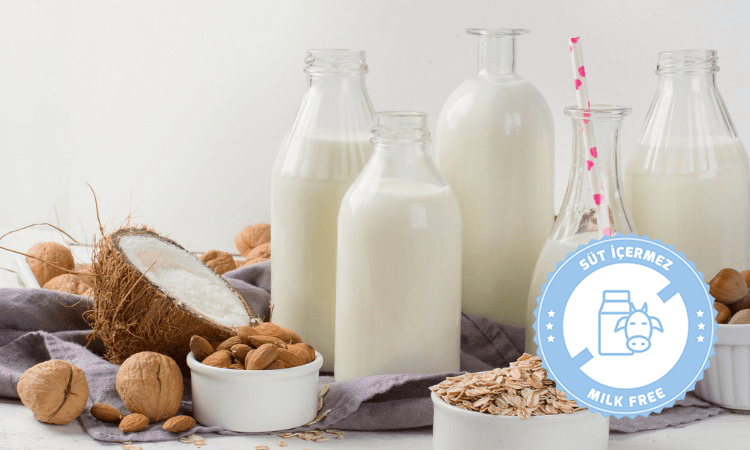
You’ve seen the words “does not contain milk” on a food package. For the mother of a child with a milk allergy, this statement offers vital reassurance; for someone with lactose intolerance, it brings great relief; and for a vegan consumer, it serves as important confirmation. But are the needs of these three groups really the same? And can the “milk-free” label offer the same assurance to all of them?
The “contains no milk” label states that a food product’s formulation contains no animal milk or milk derivatives—primarily cow’s, sheep’s, goat’s, and buffalo’s milk. This label is one of the most strictly regulated and requires the highest level of awareness among food allergen labeling categories. This is because milk is the source of one of the most common food allergies in children and is also the primary trigger for lactose intolerance, which affects approximately sixty-five percent of the world’s population. However, these two conditions involve entirely different mechanisms, and understanding whether the “dairy-free” label is equally safe for both is a fundamental step toward becoming an informed consumer.
Milk Allergy and Lactose Intolerance: Two Different Conditions Often Confused
To fully grasp the importance of the “milk-free” label, it is first necessary to understand the fundamental difference between a milk allergy and lactose intolerance. Although these two conditions are often used interchangeably, their causes, symptoms, and management strategies are entirely different.
Milk Allergy
It is an abnormal reaction of the immune system to milk proteins. Casein and whey protein are the primary allergens. Even the smallest amount of milk protein can trigger a severe reaction, including anaphylactic shock. All forms of milk must be strictly avoided. Even lactose-free dairy products are not safe for people with milk allergies because they contain milk protein.
Lactose Intolerance
It results from the digestive system’s inability to produce sufficient amounts of the lactase enzyme, which breaks down lactose, the sugar found in milk. It causes digestive symptoms such as bloating, gas, and diarrhea but is not related to the immune system. Lactose-free dairy products can be safely consumed. Tolerance levels vary from person to person; some individuals may tolerate small amounts of lactose.
This fundamental difference clearly illustrates why “dairy-free” and “lactose-free” labels do not mean the same thing. A lactose-free product is a regular dairy product in which the milk sugar has been broken down by adding the lactase enzyme, and it still contains all the milk proteins. Therefore, it is definitely not safe for someone with a milk allergy. In contrast, a product labeled “dairy-free” has been completely stripped of all milk components and is suitable for both groups.
Hidden Sources of Milk in Food Labels
Milk and milk derivatives appear in the food industry not only in obvious forms such as milk, yogurt, and cheese, but also in a much wider range of unexpected products. The presence of any of the following ingredients in a product that does not carry a “dairy-free” label indicates that the product poses a risk to those with a milk allergy:
| Dairy-Derived Ingredient | Alternative Names | Unexpected Products Where It May Be Found | Allergen Status |
|---|---|---|---|
| Casein | Caseinate, sodium caseinate, calcium caseinate, casein hydrolysate | Vegan cheese alternatives, protein powders, deli meats, chewing gum | High allergen. Even trace amounts pose a risk. |
| Whey | Whey, whey powder, whey protein, demineralized whey | Protein bars, bread, crackers, instant soups, sports drinks | High allergen risk. It is the most common hidden source of milk. |
| Lactose | Milk sugar, lactose monohydrate | Medication tablets, spice mixes, potato chips, prepared sauces | Low allergen risk but poses a risk for intolerance. |
| Lactalbumin | Alpha-lactalbumin, beta-lactoglobulin | Infant formula, specialized medical foods, baked goods | High allergen. Reactions may occur even through inhalation. |
| Butter and Clarified Butter | Butter, ghee, butter flavor, milk fat | Popcorn, ready-to-eat rice mixes, bouillons, cookies | High allergen risk. Even ghee may contain protein residues. |
| Lactic Acid | E270, lactic acid (mostly produced by plant fermentation) | Pickles, olives, fermented beverages, bread | Generally safe, but the source should be verified. |
As can be seen from this table, dairy derivatives are extremely common in the food industry and are often used in unexpected places. Whey powder, in particular, can be found in nearly every category of processed foods due to its cost advantages and functional properties.
Legal Regulations and Enforcement of the “Dairy-Free” Claim
Milk ranks among the top allergens on the list of substances that must be declared under the Turkish Food Codex Labeling Regulation. The legislation requires that all ingredients derived from milk and dairy products be clearly listed in the ingredients list and distinguished from other ingredients. This legal requirement serves as an important safety net for consumers with milk allergies.
The verification process for the “Does not contain milk” declaration consists of the following stages:
- Formulation and Raw Material Verification: The manufacturer submits the technical specifications and allergen declaration forms for all raw materials used to the verification body. It is documented that each raw material is free of milk derivatives.
- Production Line Cross-Contamination Control: If products containing milk are also manufactured at the same facility, the separation of production lines or the validation of cleaning procedures is required. Surface swab tests are conducted to detect milk protein residues.
- Milk Protein Screening via ELISA Test: Samples taken from the final product are tested for milk proteins using the ELISA method at accredited laboratories. The detection limit is generally at the parts-per-million level.
- Periodic Inspections and Sample Analysis: After certification is obtained, unannounced inspections are conducted at least once a year, and product samples are reanalyzed.
Surprising Risks in “Milk-Free” Product Categories
The biggest misconception among consumers looking for “milk-free” labels is that hidden sources of milk can be found in product categories where milk is not naturally expected. Below, you’ll find unexpected product categories that those with milk allergies should pay special attention to:
Vegan Cheese Alternatives
Some manufacturers add casein to plant-based cheeses to improve their melting properties. Plant-based cheeses that do not carry a “vegan” label may contain milk protein.
Deli Meats
Whey powder is frequently used as a binder and moisture retainer in processed meat products such as salami, sausage, and ham.
Medications and Supplements
Lactose is widely used as a filler in tablet-form medications. Probiotic supplements may be produced in milk-based culture media.
Breakfast Cereals
In granola and muesli mixes, whey powder, yogurt powder, or milk fat may be used as binders and flavor enhancers.
Instant Soups and Bouillons
In cream-based soup mixes, milk powder and whey powder are standard ingredients used as thickening agents and flavor enhancers.
Chips and Snacks
Whey powder is widely used as a flavor carrier, especially in seasoned chips. It can even be found in chips that aren’t cheese-flavored.
Label-Reading Strategy for People with Milk Allergies
Living with a milk allergy requires constant attention and a disciplined approach to reading labels. The following systematic approach will help minimize risks while shopping:
- Scan the ingredient list for allergen highlights. Look for terms such as “milk,” “milk powder,” or “whey” written in bold, italics, or a different color. These highlights are required by law.
- Distinguish between the “Dairy-Free” logo and the “Lactose-Free” logo. The lactose-free logo is typically shaped like a milk carton with a cross through it. The “milk-free” logo, on the other hand, is usually issued by independent certification organizations.
- Learn about alternative names and derivatives. Terms such as casein, caseinate, whey, lactalbumin, lactose, and milk fat are all derived from milk and pose a risk to those with allergies.
- Take “may contain trace amounts” warnings seriously. Products with this warning are not suitable for individuals with severe milk allergies. Consult your doctor to assess your risk level.
- Stay informed about changes to product formulations. The ingredients in a product you previously consumed safely may have changed. Reread the label every time you shop.
- Always ask for information when eating out. Dairy products are common in sauces, soups, and baked goods served in restaurants. Clearly inform the server or chef about your allergy.
The “dairy-free” label is perhaps one of the most widely relevant and sensitive statements among food labels. Behind this label lies a vital safety net for individuals with milk allergies, digestive comfort for those with lactose intolerance, and confirmation of an ethical choice for vegans. However, the needs of these three groups are not the same, and the “dairy-free” label carries a different meaning for each. The next time you go shopping, take a closer look at this small but powerful statement on the packaging; for some, it’s not just a preference—it’s a necessity.