























"Does Not Contain Tree Nut Allergens" Label: Which Products Are Truly Safe?
Analyses Showing That the Product Does Not Contain Nut Allergens
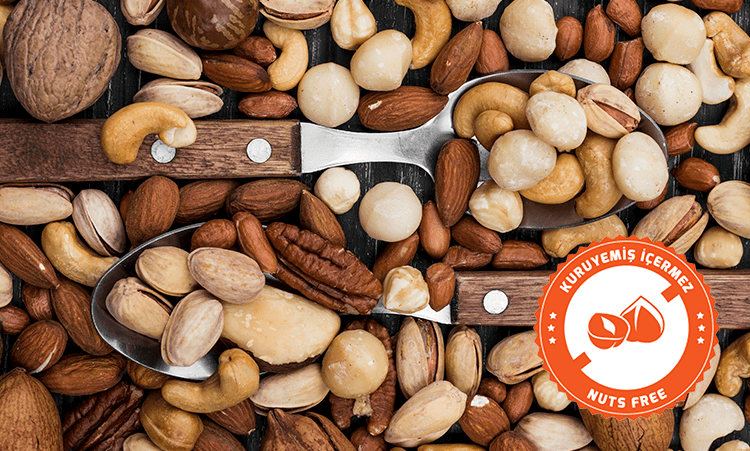
For someone with a nut allergy, grocery shopping is a serious risk management exercise. One wrong choice can lead to life-threatening consequences ranging from itching and rashes to anaphylactic shock. That is precisely why the “does not contain tree nut allergens” label on packaging is not just a marketing claim—it is, quite literally, a safety certificate for some consumers. So under what conditions can this label be used, what inspections does it undergo, and what should you, as a consumer, be aware of?
The “Does Not Contain Tree Nuts” label is a food safety statement declaring that a food product’s formulation contains no tree nut derivatives, including tree nuts and peanuts. This label promises much more than just the absence of tree nuts in the ingredient list; it also indicates that cross-contamination is kept under control during the production process. Allergen labeling is one of the most strictly regulated areas of food safety legislation because what is at stake here is not consumer preference, but directly consumer health.
The Role of Nut Allergens in Legal Regulations
The Turkish Food Codex Labeling Regulation and the European Union’s Regulation (EU) No. 1169/2011 on Food Information place nuts at the top of the allergen list. The regulations require that allergenic ingredients be highlighted in the ingredient list using a different font size, typeface, or background color than other ingredients. This allows consumers with allergies to identify risky ingredients at a glance when scanning the ingredient list.
The table below lists the primary nut allergens that must be declared under the regulations, along with their common uses in the food industry:
| Allergenic Nuts | Mandatory Declaration | Products in Which They May Be Hidden | Most Common Cross-Reaction |
|---|---|---|---|
| Peanuts | Yes, in all cases | Sauces, chocolates, desserts, ice cream, instant soups, spice blends | Soy, legumes |
| Hazelnuts | Yes, in all cases | Cocoa-containing products, baking ingredients, breakfast cereals, ice cream | Other tree nuts, birch pollen |
| Almonds | Yes, in all cases | Marzipan, almond paste, cosmetic products, almond milk, gluten-free flour mixes | Peaches, apricots, cherries |
| Walnuts | Yes, in all cases | Salad dressings, pesto, bread, cake, baklava | Pecans, other tree nuts |
| Cashews | Yes, in all cases | Plant-based milk alternatives, vegan cheeses, Asian cuisine sauces | Pistachios, mango |
| Pistachios | Yes, in all cases | Ice cream, halva, chocolate, pesto sauce, deli meats | Cashews, mango |
The reason regulations are so strict lies in painful past experiences. Fatal incidents that occurred in the past due to a lack of allergen labeling played a decisive role in shaping today’s strict food labeling rules. At this point, allergen labeling has become an integral part of food safety.
The Critical Difference Between Direct Ingredients and Cross-Contamination
When it comes to nut allergens, the most important distinction consumers need to understand is the difference between direct ingredients and cross-contamination. These two concepts represent entirely different risk levels and are expressed differently on the label.
Direct Ingredient
Refers to nuts intentionally used in the product’s formulation. It must be clearly and prominently stated in the ingredient list. For example, hazelnut pieces used in chocolate are direct ingredients and are listed as “hazelnuts” in the ingredients list.
Cross-Contamination
This refers to unintended and uncontrolled contamination originating from other products containing nuts that are processed on the same production line or in the same facility. It is indicated on the label as “may contain trace amounts of hazelnuts” or “peanuts are processed on this production line.”
A product labeled “Does not contain nut allergens” should ideally eliminate both risks. In other words, the product should contain no direct nut ingredients and there should be no possibility of cross-contamination. However, in practice, it is technically extremely difficult to completely eliminate cross-contamination, especially in products manufactured at facilities that process nuts.
Unexpected Product Categories That Pose a Nut Allergen Risk
Most consumers look for tree nut allergens only in obvious products like snacks and chocolate. However, in the food industry, tree nut derivatives can appear in products you would never expect. Below, you will find product groups that carry a risk of tree nut allergens but are often overlooked:
Spice and Seasoning Blends
Ground nuts are used to add texture and flavor to sauces. Peanut or almond powder is frequently found in spice blends typical of Asian and Middle Eastern cuisines.
Plant-Based Milk Alternatives
Products such as almond, cashew, and hazelnut milk contain nuts directly. However, other plant-based milks—such as oat or soy milk—may also pose a risk of cross-contamination if produced in the same facility.
Spreadable Creams
In addition to hazelnut and almond butters, all products containing chocolate-hazelnut spreads, praline fillings, and nougat contain nut allergens.
Vegan Cheese Alternatives
Cashew-based vegan cheeses are becoming increasingly common. Even products labeled as soy- or coconut-based may pose a risk if cashews are processed in the same facility.
Gluten-Free Flour Blends
Almond flour, hazelnut flour, and coconut flour are frequently used as substitutes for wheat flour in gluten-free products. A “gluten-free” label does not mean the product is nut-free.
Protein Bars and Sports Supplements
Protein bars containing peanut butter, almonds, and cashews are common. Even nut-free products from the same brand may carry a risk of contamination.
Certification Process and Independent Auditing
A “nut-free” label does not provide sufficient assurance when based solely on the manufacturer’s declaration. The certification process conducted by independent certification bodies significantly enhances the reliability of this label. A certified product must undergo the following audit stages:
- Raw Material Supply Chain Audit: It is documented that all raw materials used, starting from the suppliers, are free of tree nut allergens. An allergen declaration form and an analysis certificate are required for each raw material.
- Production Line Risk Analysis: An on-site inspection is conducted to determine whether other products containing tree nuts are produced at the facility, whether production lines are physically separated, and whether cleaning procedures are adequate.
- Cleaning Validation: Surface swab tests and rinse water analyses are used to verify that production lines are free of nut residues after cleaning.
- ELISA and PCR Analyses: Samples taken from the final product are tested in accredited laboratories for nuts-specific proteins and DNA residues. The detection limit is generally at the part-per-million level.
- Periodic Re-inspection: Once certification is granted, unannounced inspections and sample analyses are conducted at least once a year. In the event of any non-compliance, the certification is suspended.
Label-Reading Strategy for Consumers with Allergies
For consumers with nut allergies, reading labels is an integral part of daily life. The following systematic approach will help minimize risks while shopping:
- Read the ingredient list every time. The formulation of a product you’ve safely consumed before may have changed. Phrases on the packaging such as “new formula” or “improved recipe” serve as a warning to double-check the ingredient list.
- Scan for allergen highlights. Ingredients written in bold, italics, or a different color indicate allergens as required by law. If you see these highlights, set the product aside.
- Take cross-contamination warnings seriously. Discuss with your doctor whether the phrase “may contain trace amounts” represents a tolerable risk for you.
- Pay attention to Latin and alternative names. Arachis hypogaea is the Latin name for peanuts, Prunus dulcis for almonds, and Juglans regia for walnuts. These names may be used on some imported products.
- Be extra careful in places where food is served to the public. Since packaged products are not available in restaurants, bakeries, and delis, it is entirely your responsibility to inquire about ingredients.
- Keep your emergency plan ready at all times. No matter the severity of your allergy, carry your epinephrine auto-injector with you and check the expiration date regularly.
The “does not contain tree nut allergens” label is perhaps the most significant statement on food labels. Behind this label lies a comprehensive safety net that extends from raw materials to the production line, and from cleaning procedures to laboratory analyses. For consumers with allergies, this label is not a convenience—it is a necessity. Remember that even the most reliable label cannot replace your own vigilance. Continue to read the ingredient list with every purchase, contact the manufacturer if you have any doubts, and never leave your health at the mercy of any marketing claims.