























"No Sweeteners" Label: The Difference Between Sugar and Sweeteners
Sweetener Free Analysis
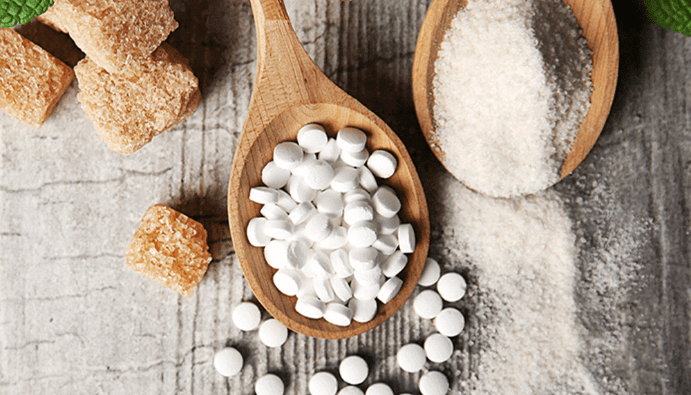
You’ve seen the phrase “contains no sweeteners” on a beverage bottle. Does this mean the product doesn’t contain any sugar? Or, on the contrary, does it mean that while it contains plenty of sugar, it simply doesn’t use artificial sweeteners? The “no sweeteners” label is one of the labeling statements that causes the most confusion among consumers, and at the root of this confusion lies a lack of clear understanding of the distinction between sweeteners and sugar.
The “no sweeteners” label states that the product’s formulation contains no sweeteners classified as food additives. This statement does not mean the product is sugar-free; it merely guarantees that intense sweeteners such as aspartame, sucralose, and acesulfame potassium, as well as sugar alcohols like xylitol and sorbitol, have not been used. In fact, it is possible to find many products on the market bearing the “no sweeteners” label but containing high amounts of beet sugar or corn syrup.
Types of Sweeteners and Their Differences
To correctly interpret the “sweeteners-free” label, it is first necessary to understand which substances fall under the definition of “sweeteners.” Sweeteners used in the food industry are broadly divided into three main groups: artificial sweeteners, natural sweeteners, and sugar alcohols. Each group has its own unique characteristics, advantages, and controversial aspects.
The table below provides a comparative overview of the basic characteristics of these three groups:
| Sweetener Group | Source | Sweetness Ratio (Compared to Table Sugar) | Caloric Value | Common Examples |
|---|---|---|---|---|
| Artificial Sweeteners | Produced through chemical synthesis. | 200 to 600 times sweeter | Calorie-free or negligible | Aspartame (E951), sucralose (E955), acesulfame K (E950), saccharin (E954) |
| Natural Sweeteners | Derived from plant sources. | 200 to 300 times sweeter | Calorie-free | Steviol glycosides (E960), monk fruit extract |
| Sugar Alcohols (Polyols) | Found naturally in fruits; produced industrially from sugar. | Similar to or lower than sugar | Contains about half the calories of sugar | Xylitol (E967), sorbitol (E420), erythritol (E968), maltitol (E965) |
The most critical distinction among these three groups is that they are all classified as “sweeteners” under the regulations. This means that if a product is labeled “sweeteners-free,” it must not contain any substances from the groups listed above—including those derived from natural sources, such as stevia. The manufacturer’s claim must be verifiable through laboratory analysis during inspections.
Legal Regulations and Inspection Process
According to the Turkish Food Codex, the statement “contains no sweeteners” may be used only if the product contains absolutely no food sweeteners and in a manner that does not mislead the consumer. A manufacturer that includes this claim on its label must prove that no sweeteners were used in the product’s formulation and that no sweeteners were introduced—even through cross-contamination—during the production process.
The inspection process begins with a review of the formulation. The manufacturer submits the technical specifications of all raw materials used to the inspection body. A key point of focus at this stage is whether sweeteners are used as carriers in auxiliary ingredients such as flavorings. Some liquid flavorings may contain sorbitol or similar sugar alcohols as carrier solvents, which invalidates the “sweeteners-free” claim.
In the second stage, the production line is inspected. If other products containing sweeteners are also manufactured at the same facility, validation of cleaning procedures to prevent cross-contamination between lines is required. In the final stage, analyses conducted by independent accredited laboratories confirm that no sweetener residues are present in the product.
Common Misconceptions Among Consumers
When it comes to the “no artificial sweeteners” label, certain misconceptions in consumers’ minds can make it difficult to make healthy choices. Below are the four most common misconceptions and the facts:
“If it says ‘no sweeteners,’ it must be sugar-free.”
This is the most common misconception. Even if a product contains no artificial sweeteners, it may still be sweetened with natural sugar sources such as beet sugar, corn syrup, honey, molasses, or fruit juice concentrate.
“Natural sweeteners aren’t considered food additives.”
Plant-based sweeteners like stevia are also classified as food additives and have an E number. The “no sweeteners” claim applies to all sweeteners, including natural ones.
“A product without sweeteners is healthier.”
This is not always true. A product that contains no sweeteners but is high in sugar may be less favorable than its sweetened counterpart in terms of calories and glycemic load.
“Honey, molasses, and maple syrup are not sweeteners.”
Legally, these are not classified as sweeteners but as food or food ingredients. Therefore, a product may carry a “no sweeteners” label even if it contains them.
A Practical Method for Reading Labels Correctly
When you see a “no sweeteners” label, don’t rely on this information alone to make a decision about the product as a whole. You can make a more informed assessment by following these steps:
- Read the ingredient list from start to finish. Terms such as sugar, glucose syrup, fructose syrup, honey, molasses, and fruit juice concentrate indicate that the product may contain high levels of sugar even if it does not contain sweeteners.
- Check the “sugars” row in the nutrition facts table. A product containing more than 15 grams of sugar per 100 grams is considered high in sugar.
- Check to see if the phrases “contains no sweeteners” and “no added sugar” appear together. Products that include both phrases contain neither sweeteners nor added sugar; they contain only the sugar naturally present in the raw ingredients.
- Pay attention to the product’s target audience. The use of sweeteners is particularly common in products for diabetics. In such products, the phrase “contains no sweeteners” may mean that the product is sweetened with sugar, which poses a risk to people with diabetes.
“Decisions regarding the safety of sweeteners should be based on scientific evidence; as long as the established acceptable daily intake for each sweetener is adhered to, approved sweeteners do not pose a health risk.” — European Food Safety Authority Assessment Principle
The “no sweeteners” label is an important clue for an informed consumer but should never be interpreted on its own as an indicator of healthiness. The first question that should come to mind when you see this label is: “So, what is this product sweetened with?” The answer lies in the ingredient list. A product sweetened with natural sources such as sugar, honey, molasses, or fruit concentrate may still be high in calories and have a high glycemic load, even though it contains no artificial sweeteners. The best approach is to evaluate the label as a whole, examine the nutrition facts panel, and make a decision based on your own health needs.