























What ‘Cruelty-Free’ Does Not Mean: Misconceptions About Animal Testing
What Is Cruelty Free?
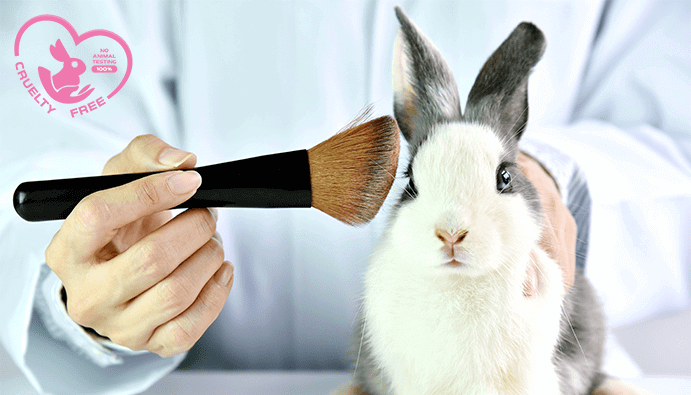
The terms “cruelty-free” and “vegan” are often used interchangeably. However, these two concepts have different meanings and guarantee different things. “Cruelty-free” means that a product has not been tested on animals. This concept is not directly related to whether the product contains animal-derived ingredients. A product may carry a “cruelty-free” certification but still contain animal-derived ingredients such as lanolin, beeswax, silk protein, or carmine. “Vegan,” on the other hand, means that a product contains no animal-derived ingredients whatsoever. This term is not directly related to whether the product was tested on animals. A product can be vegan but may still have been tested on animals. What does “cruelty-free” guarantee? That it was not tested on animals. What does “cruelty-free” not guarantee? That it contains no animal-derived ingredients. What does “vegan” guarantee? That it contains no animal-derived ingredients. What does “vegan” not guarantee? That it has not been tested on animals. The fact that a product carries a “cruelty-free” certification does not mean that it complies with a legally mandated requirement in the country where it is sold. A “cruelty-free” certification is a voluntary commitment by the manufacturer. In some countries, testing cosmetic products on animals is legally prohibited. However, this legal ban applies only within the borders of that country. When a product carries a “cruelty-free” certification, it indicates that the manufacturer does not conduct animal testing throughout its entire supply chain and in all markets. Therefore, a “cruelty-free” certification is an ethical commitment that goes beyond legal compliance. Additionally, in certain product categories evaluated under chemical safety regulations (household cleaning products, chemicals), animal testing may be legally required. Therefore, a “cruelty-free” certification may not imply an absolute ban on animal testing, as it does for cosmetic products. The scope of the certification varies depending on the product category. A “cruelty-free” certification indicates that the manufacturer does not voluntarily conduct animal testing in its current production process and that there is no voluntary animal testing in its supply chain. However, this does not mean the product has never been subject to animal testing in the past. In particular, chemicals that have been in use for a long time (such as sodium hypochlorite, certain UV filters, and certain preservatives) were subjected to extensive animal testing throughout the 20th century. These tests form the basis of the safety data available today. “Cruelty-free” certification does not aim to disregard this historical data; rather, it aims to verify that the current production process does not require new animal testing. This distinction is critically important for understanding the scope of certification, particularly in non-cosmetic categories (household chemicals, detergents). A cruelty-free certification does not mean that a product’s ingredients are natural, plant-based, or harmless to the skin. This certification focuses solely on the aspect of animal testing. A product may be “cruelty-free” but still contain synthetic ingredients, petroleum derivatives, or potential allergens. Similarly, a product may be labeled as “natural” or “plant-based” but may still have been tested on animals. These two concepts represent different aspects. A product with a “cruelty-free” certification may contain ingredients that could cause an allergic reaction. Fragrance ingredients, preservatives, and certain active ingredients can trigger allergic reactions in sensitive skin. A “cruelty-free” certification does not eliminate this risk; it merely indicates that no animal testing was conducted. A product with a “cruelty-free” certification may not be suitable for all skin types. Certain ingredients can cause irritation in specific skin types. A product’s skin compatibility is a separate matter of evaluation, and the “cruelty-free” certification does not cover this evaluation. A “cruelty-free” certification does not guarantee that the product is free of animal-derived ingredients. This is one of the most common misconceptions. A product may carry a cruelty-free certification but still contain animal-derived ingredients such as lanolin, beeswax, propolis, silk protein, carmine, collagen, keratin, chitosan, or lysozyme. None of these ingredients require animal testing; however, they are all of animal origin. For a product that is both cruelty-free and free of animal-derived ingredients, you should look for both a cruelty-free certification and a vegan certification. These two certifications complement each other but are not interchangeable. A product can be cruelty-free but not vegan: It has not been tested on animals but contains lanolin. A product may be vegan but not cruelty-free: It contains no animal-derived ingredients but has been tested on animals. The ideal scenario: It holds both cruelty-free and vegan certifications. A “cruelty-free” certification applies not only to a specific product but to the brand’s entire production process. While one of a brand’s products may carry a “cruelty-free” certification, another may not. This provides insight into the brand’s consistency. Similarly, cruelty-free certification covers the brand’s entire supply chain. If a raw material used in one of the brand’s products is also used in another product and that raw material has a history of animal testing, both products are affected in terms of certification. A cruelty-free certification represents a brand’s voluntary commitment on a global scale. However, this commitment has certain limitations. If a brand sells in a market where animal testing is legally required, it cannot obtain a cruelty-free certification, or its existing certification will be revoked. For this reason, certified brands commit to not selling in such markets. However, monitoring and enforcing this commitment can be geographically complex. A cruelty-free certification indicates that the brand does not voluntarily conduct animal testing in its product development and manufacturing processes. However, it does not cover whether the brand conducts animal testing in other areas (such as medical research or education). While some major cosmetics brands do not test on animals for their cosmetic products, their parent companies may conduct animal testing in the fields of medical research or drug development. This situation falls outside the scope of the “cruelty-free” certification. The certification guarantees only the prohibition of animal testing within the relevant product category. Clarifying the boundaries of the “cruelty-free” concept is important for correctly understanding its true meaning and significance. It is not vegan. It does not guarantee the absence of animal-derived ingredients. It is not a legal ban; it is a voluntary commitment. It does not mean “natural” or “harmless.” It does not guarantee the absence of allergens. It does not mean the product is safe for the skin. It does not necessarily apply to all of the brand’s products. It does not cover the brand’s other areas of operation. A product not tested on animals. A voluntary ethical commitment. A product that may contain animal-derived ingredients. Certification based on historical testing data. A commitment with geographic limitations. A sense of responsibility that goes beyond the legal framework. The concept of “cruelty-free” is a strong commitment, but its boundaries must be clearly understood. This concept centers on the ban on animal testing but is limited in areas such as animal-derived ingredients, the legal framework, geographic scope, and the brand’s overall operations. Confusing the “cruelty-free” and “vegan” concepts, equating them with terms like “natural” and “harmless,” or equating them with legal bans leads to a blurring of the concept’s true meaning. Understanding this concept correctly is critically important for consumers to make informed choices and for brands to communicate transparently. “Cruelty-free” is exactly what it is: a commitment to a ban on animal testing. Nothing more, nothing less.
The term “cruelty-free” is appearing more and more frequently on product labels and in brand campaigns. However, it’s just as important to understand what the term does not mean as it is to understand what it does. This is because “cruelty-free” is often confused with the term “vegan,” equated with legal bans, or associated with animal-derived ingredients. In this article, we explore the boundaries of the “cruelty-free” concept and common misconceptions, focusing on animal testing.
“Cruelty-free” does not mean “vegan”
“Cruelty-free” is not a legal ban
“Cruelty-free” does not always mean “not tested on animals”
“Cruelty-free” does not mean ‘natural’ or “harmless”“Cruelty-free” does not mean the product is free of allergens
“Cruelty-free” does not mean “safe for the skin”
“Cruelty-free” does not mean “free of animal-derived ingredients”
“Cruelty-free” is not limited to a single product
Cruelty-free knows no geographical boundaries, but there are some exceptions
“Cruelty-free” does not mean “no animal testing was conducted”; in some cases
What “cruelty-free” is not: summary“Cruelty-free” does not mean the following:
“Cruelty-free” may refer to the following:
CLICK HERE TO GET A PRICE OFFER.