























What Does "Cruelty-Free" Mean? The Meaning of the Term and Its Everyday Usage
What Does "Cruelty-Free" Mean?
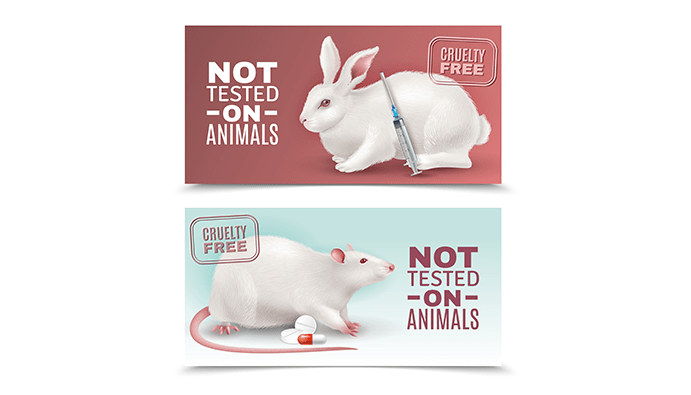
“Cruelty-free” is an English-origin term consisting of two words: “cruelty” (abuse, torment) and “free” (free of, devoid of). Therefore, “cruelty-free” literally means “free of cruelty.” When used in reference to a product or brand, however, this term takes on a more specific meaning: that no animals are harmed at any stage of the product’s development and production process. At the heart of this definition are practices known as animal testing. Cruelty-free: A term indicating that animals are not intentionally used for testing purposes at any stage of a product’s development, production, or testing processes. Animal tests refer to experiments conducted on animals to evaluate the safety of a product or its ingredients. Historically, these tests have been widely used in the cosmetics, cleaning products, and pharmaceutical industries. Methods used in these tests included applying substances while keeping the test animals’ eyelids open, applying chemicals to their skin, and force-feeding them. These tests were viewed as both severely painful and scientifically questionable practices because an animal’s skin structure, eye structure, and metabolism differ significantly from human biology. The term “cruelty-free” specifically refers to the removal of these tests from the product development and manufacturing process. If a product is labeled “cruelty-free,” neither the final product nor any of the ingredients in its formulation have been tested on animals. When you see the term “cruelty-free” on a product label, it tells you a few things. However, it is just as important to know what it does not mean. The term “cruelty-free” emphasizes the ethical dimension of the concept. Animal testing is not merely a scientific practice; it is also the subject of a serious ethical debate. The methods used in these tests cause animals severe pain. Testing processes last for days, sometimes weeks, and the animals are constantly monitored throughout this period. At the end of the test, the animals are generally unable to survive. For this reason, the “cruelty-free” concept is not merely a production standard; it is also an ethical stance regarding animal welfare. The phrase “cruelty-free” highlights this ethical dimension and reminds consumers of the values behind the product. For a product to be “cruelty-free” means that no living being was harmed during its production process. The concept of “cruelty-free” goes beyond an abstract definition; it has concrete manifestations in everyday life. These manifestations span a wide range, from consumer purchasing choices to brands’ production policies. When a consumer chooses a product with a cruelty-free certification, they are essentially making a value-based choice. This choice reflects their commitment to animal welfare and support for ethical production practices. Every purchase is like a vote; it shows which brand and which production philosophy are being supported. When a brand obtains a cruelty-free certification, it commits to structuring its production processes in accordance with this pledge. This encompasses a wide range of areas, from supply chain management to formulation development, and from testing processes to marketing communications. The cruelty-free commitment becomes an integral part of the brand’s corporate identity. The “cruelty-free” concept has brought about a profound transformation in the cosmetics and cleaning products industries. The development of animal-free testing methods, stricter legal regulations, and increased consumer awareness have changed the industry’s overall production philosophy. Today, many major brands have placed the cruelty-free commitment at the center of their corporate policies. The “cruelty-free” label does not offer the same assurance every time it is used. In some cases, this label may be used without being backed by independent certification and can be misleading. Some manufacturers may add the “cruelty-free” label to their products without obtaining approval from an independent certification body. The legal validity of such claims is limited, and they cannot be verified. Therefore, consumers should look for an independent certification logo. Only a specific product from a brand may be “cruelty-free,” not all of the brand’s products. Therefore, it is necessary to check which product the label applies to. A brand’s general policy and product-specific certification are two different things. Some chemicals that have been in use for a long time were subjected to animal testing in the past. “Cruelty-free” certification does not aim to eliminate this historical data; rather, it aims to verify that the current production process does not require new animal testing. Understanding this distinction is important for correctly grasping the scope of the concept. The “cruelty-free” concept holds several practical meanings for consumers. First, it makes the ethical commitment behind the product visible. Consumers know what values the product they are purchasing represents. Second, it offers the opportunity for conscious choice. Products bearing a “cruelty-free” certification allow consumers to make choices aligned with their own values. This represents a more holistic approach than shopping based solely on price and performance. Third, it contributes to industry transformation. Consumers’ shift toward cruelty-free products encourages brands to adjust their production policies accordingly. When demand changes, supply changes as well; this means that individual choices create a collective impact. “Cruelty-free” literally means “free from cruelty.” When applied to a product, it means that no animals are harmed at any stage of the product’s development and production process. This concept refers to the elimination of animal testing from the product development process and serves as a concrete demonstration of an ethical commitment. The “cruelty-free” label indicates that the product has not been tested on animals; however, it does not provide information about animal-derived ingredients, naturalness, skin safety, or the brand’s other products. The practical implications of this concept span a wide range of areas, from consumer preferences to brand policies, and from industry transformation to the concept of ethical consumption. Understanding this concept correctly is a fundamental step toward becoming a conscious consumer and supporting ethical production.
The term “cruelty-free” is appearing more and more frequently on product labels, in brand campaigns, and in consumer conversations. But what exactly does this term mean? Beyond its dictionary definition, what does it tell us when we see it on a product label? In this article, we explore the meaning of the “cruelty-free” concept, its real-world implications, and its practical significance for consumers.
The dictionary definition of “cruelty-free”Definition
What are animal tests, and how does “cruelty-free” relate to them?
What does a “cruelty-free” label on a product mean?
Why is the term “cruelty-free” used?
How does the concept of “cruelty-free” manifest in everyday life?In Consumer Preferences
In Brand Policies
In the Industry’s Transformation
Under what circumstances can the “cruelty-free” label be misleading?Use without independent certification
Partial Scope
Historical testing data
The practical meaning of the “cruelty-free” concept for consumers
CLICK HERE TO GET A PRICE OFFER.