























What Is "Cruelty-Free"? Animal Testing and the Meaning of Certification
What is Cruelty Free?
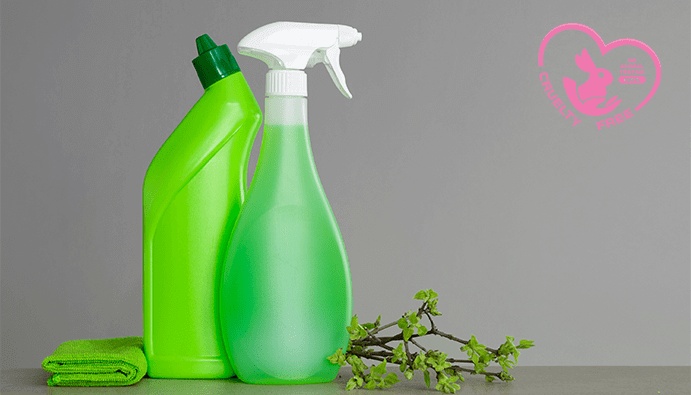
Literally, “cruelty-free” means “free from cruelty.” When applied to a product or brand, it means that animals are not harmed at any stage of the product’s development or production process. At the heart of this definition are practices known as animal testing. Animal testing refers to experiments conducted on animals to assess the safety of a product or its ingredients. Historically, these tests have been widely used in the cosmetics, cleaning, and pharmaceutical industries. Parameters such as skin irritation, eye irritation, acute toxicity, and allergic reactions have been evaluated on animals. The concept of “cruelty-free” specifically refers to the elimination of these tests from the product development and production process. If a product is “cruelty-free,” neither the final product nor the ingredients in its formulation have been tested on animals. Cruelty-free: A concept indicating that animals are not intentionally used for testing at any stage of a product’s development, production, or testing processes. Although the “cruelty-free” concept may initially appear to apply only to cosmetic products, it actually extends to a much broader range of areas. This scope varies depending on the product’s intended use and how it comes into contact with the skin. Cosmetics are the category where the “cruelty-free” concept originated and is most widely applied. Makeup, skincare, hair care, perfumes, and personal hygiene products fall under this category. Since these products come into direct contact with the skin, safety assessments are of critical importance, and historically, these assessments have relied on animal testing. Detergents, surface cleaners, laundry detergents, bathroom cleaners, and room sprays are also considered “cruelty-free.” These products are subject to a different legal framework than cosmetic products, and in some cases, animal testing may be legally required. Therefore, “cruelty-free” certification for household cleaning products has a different scope than that for cosmetic products. Clothing, footwear, and accessories can also be evaluated under the “cruelty-free” category. In this category, “cruelty-free” encompasses not only a ban on animal testing but also the exclusion of animal-derived materials. Materials such as leather, wool, silk, and suede are of animal origin and are not accepted under “cruelty-free” certification. Furniture, bedding, rugs, and home textiles are also evaluated under the “cruelty-free” framework. In this category, filling materials (wool, feathers), upholstery materials (leather, silk), and adhesives (animal-based glue) may be of animal origin. The terms “cruelty-free” and “vegan” are often confused, but they have different meanings. Understanding the distinction between these two concepts is critical for correctly interpreting product labels. “Cruelty-free” means that a product has not been tested on animals. This concept is not directly related to whether the product contains animal-derived ingredients. A product can be cruelty-free yet still contain animal-derived ingredients (such as lanolin, beeswax, or carmine). “Vegan” means that a product contains no animal-derived ingredients whatsoever. This concept is not directly related to whether the product was tested on animals. A product can be vegan but may still have been tested on animals. Ideally, a product should be both cruelty-free and vegan. However, this is not always the case. A product may have been tested on animals even though it contains no animal-derived ingredients; or it may contain animal-derived ingredients even though it was not tested on animals. For this reason, both concepts must be evaluated separately. Cruelty-free: A product not tested on animals. Vegan: A product that contains no animal-derived ingredients. Ideal: A product that is both cruelty-free and vegan. A cruelty-free certification is a document that verifies, through an independent assessment, that a product has not been tested on animals. This certification is not based solely on the manufacturer’s own declaration; it requires a comprehensive audit process. The first step in the certification process is documenting that every single ingredient in the formulation has no history of animal testing throughout the supply chain. This requires the manufacturer to obtain declarations regarding testing history from all raw material suppliers. For a product to receive cruelty-free certification, not a single ingredient in the formulation can have a history of animal testing. The second step in the certification process is the audit of the production process. This includes verifying that the manufacturer has not conducted animal testing in the past five years, confirming that there is no animal testing laboratory on the production premises, and assessing the risks of cross-contamination. The third step in the certification process is periodic inspection. The certificate is generally valid for one year and must be renewed annually. During the renewal process, the manufacturer’s current declarations, production records, and any formulation changes—if applicable—are reviewed. The most significant development enabling the “cruelty-free” concept to become a reality is the advancement of animal-free testing methods. These methods offer important advantages from both an ethical and scientific perspective. In vitro tests involve assessments conducted on human cells cultured in a laboratory setting. Artificial skin models are three-dimensional tissue models derived from human skin cells. Tests conducted on these models allow for the evaluation of a product’s potential irritating effects on the skin. Artificial cornea models, on the other hand, are used to assess irritation that may occur following contact with the eye. In silico modeling involves computer-aided toxicity predictions. It can predict the potential toxic effects of a compound based on its molecular structure. This method is particularly valuable for the preliminary screening of newly developed compounds. Human volunteer panels are controlled clinical trials conducted under protocols approved by an ethics committee. They are used to evaluate a product’s performance, efficacy, and skin compatibility under real-world usage conditions. Properly understanding the scope and limits of the “cruelty-free” concept is important for recognizing its strengths and limitations. In some countries and for certain product categories, animal testing may be legally required. This is particularly true for products evaluated under chemical safety regulations. “Cruelty-free” certification does not eliminate these legal requirements; however, it encourages manufacturers to keep such testing to a minimum and to use alternative methods. When a product carries a “cruelty-free” certification, it means that product was manufactured without animal testing anywhere in the world. However, if the manufacturer sells the product in a market where animal testing is mandatory, the certification loses its validity. Therefore, the “cruelty-free” commitment is a principle that knows no geographic boundaries. Some manufacturers may label their products as “cruelty-free” without independent certification. Such claims have limited legal standing. Therefore, it is important for consumers to look for an independent certification logo and verify its authenticity. The “cruelty-free” concept is more than just a label or marketing phrase. It establishes a connection between consumers’ daily choices and animal welfare. When a product carries a cruelty-free certification, it indicates that the production process behind it is conducted with an ethical commitment. This commitment not only protects animals but also encourages science to evolve toward a human-centered approach. The development of animal-free testing methods has brought about a profound transformation in the cosmetics and cleaning products industries. Behind this transformation lie consumers’ conscious choices. “Cruelty-free” is a concept that means no animals are harmed at any stage of a product’s development and production process. This concept centers on the ban on animal testing and covers a wide range of products, from cosmetics to textiles, and from household cleaning products to furniture. Although the terms “cruelty-free” and “vegan” are often confused, they have different meanings; “cruelty-free” refers to the ban on animal testing, while “vegan” refers to the absence of animal-derived ingredients. The certification process includes supply chain audits, production process audits, and periodic renewal. The development of animal-free testing methods is the most significant advancement that has made the “cruelty-free” concept a reality. Understanding the scope and legal framework of this concept is a fundamental step toward becoming an informed consumer.
The term “cruelty-free” has been appearing with increasing frequency in recent years on product labels, in brand campaigns, and in consumer conversations. However, it is often unclear exactly what this term means, which products it covers, and what its boundaries are. In this article, we explore the concept of “cruelty-free” starting with its most basic definition, examining its relationship to animal testing, the certification process, and its practical implications in everyday life.
What is “cruelty-free,” and how does it relate to animal testing?
What areas does the “cruelty-free” concept cover?Cosmetics and personal care products
Household cleaning products
Textiles and fashion products
Home goods and furniture
What is the difference between “cruelty-free” and “vegan”?What does “cruelty-free” mean?
What does “vegan” mean?
The overlap between the two concepts
How does cruelty-free certification work?Supply chain audit
Production Process Audit
Periodic Inspection
What are animal-free testing methods?In vitro tests
In silico modeling
Human volunteer panels
What are the limits of the “cruelty-free” concept?Legal Requirements
Geographic Scope
Misuse of the Term
The Practical Meaning of the “Cruelty-Free” Concept
CLICK HERE TO GET A PRICE OFFER.